Housekeeping

I have been doing some reading and writing. I always am, but this time it is to some concrete, even if minor, purpose. Both activities (how funny it is to say it) have prevented me from sending one of these letters. I am glad to have work to do, glad that the work is intellectual or creative work of some kind. (Edmund Wilson, from France, to Alfred Bellinger, 1918, ‘It is so long since I have done any work requiring even moderate intelligence that I shall accept the humblest task with trepidation.’ Not trepidation in my case. Rather, gratitude.)
A second reason is that ideas have eluded me for the newsletter; those I had I could not pull off in an hour. (I write many of the letters in one sitting; it’s why they look how they do.)
In the intervening period, however, new people have subscribed to this letter (perhaps brought here by the JPP). (Thank you.) So I will use this as an opportunity to say something about myself. Indulge me if you’ve heard this before.
My name is Ernest Jésùyẹmí (Ogunyemi, formerly). I was born in Lagos at Randle Avenue, Surulere, to a handsome young man and a beautiful young woman. The man, my father, is still here; the woman is not. At the age of 12, I came to Lagos from Ejigbo, Osun state. I was wearing a pair of grey shorts and a pink girl’s cardigan. I did not know the cardigan was a girl’s until I got to Lagos and my cousins said so. I liked it; my mother bought it for me shortly before she passed.
In Lagos, one night in December I rapped for my daddy’s friends who were drinking beer at Mama Agbor’s and my life as a rapper began. (I have fictionalized Mama Agbor in a short story, here.) I tried on a few nicknames: ‘Superstar,’ I remember, was one. But I later settled on ‘Young Blow.’ There was an article in Sunday Sun years ago that featured me and said, ‘YOUNG BLOW: NEW KID ON THE BLOCK.’ I have tried to find the article, I haven’t found it yet—though I remember well the day it came out. We were living in Ladi-Lak, in a church where my father was an assistant pastor. We bought a copy of the paper.
For three years, I would go places as a rapper. My last show was at Ajayi Crowther Memorial Grammar School, a contest where I received a sculpted golden microphone for being the best rapper in Bariga. I recorded two songs in the studio. One at Modupe Cole, with Jumzy Doo, produced by KayWheelz—wheels because this guy used a wheel chair. The other song was with Easy Plus (formerly Minus Two, the guy who did ‘Street Love’ with Olamide). I have neither of the two songs.
Sometime around that time, I visited a man in the mission house where I was staying (where I set this poem) and saw a pile of books by the window, next to a bucket of drinkable water. I think the man changed my life.
I would pray to Christ one night on that street in Bariga. I would say, ‘Lord, make me a writer.’ I wanted to be a writer like John C. Maxwell, the kind that inspires. I think he heard my prayer: I wrote a few motivational books in my diary before finally writing, with a dictionary open on the stool in front of me, a story about a sister in UNILAG who stayed back at home on a Sunday because she had a man with her.
One day, I bought a used copy of Purple Hibiscus from a boy in my class and read it. My father saw that I liked Chimamanda Adichie, and one day came home with Half of a Yellow Sun. Bless him.
I like to joke that I have written or thought about literature almost every day since then. It has been an addiction.
For curiosity’s sake, here is the first interview I ever had as a writer. Rereading it, I sound just as I sound now, and I am struck by the confident diffidence. This response I gave to why I write is striking to me: ‘My greatest motivation is survival. I write to survive. If I get not to write again, I will most likely die. So, when I think of survival, I think of my writing. It’s all I have.’
I don’t think anyone has an idea how much literature has meant to me. I no longer write to survive (in that hardcore existential sense), but, to quote Edmund Wilson again, I may be described as ‘one who . . . lives very largely through language.’
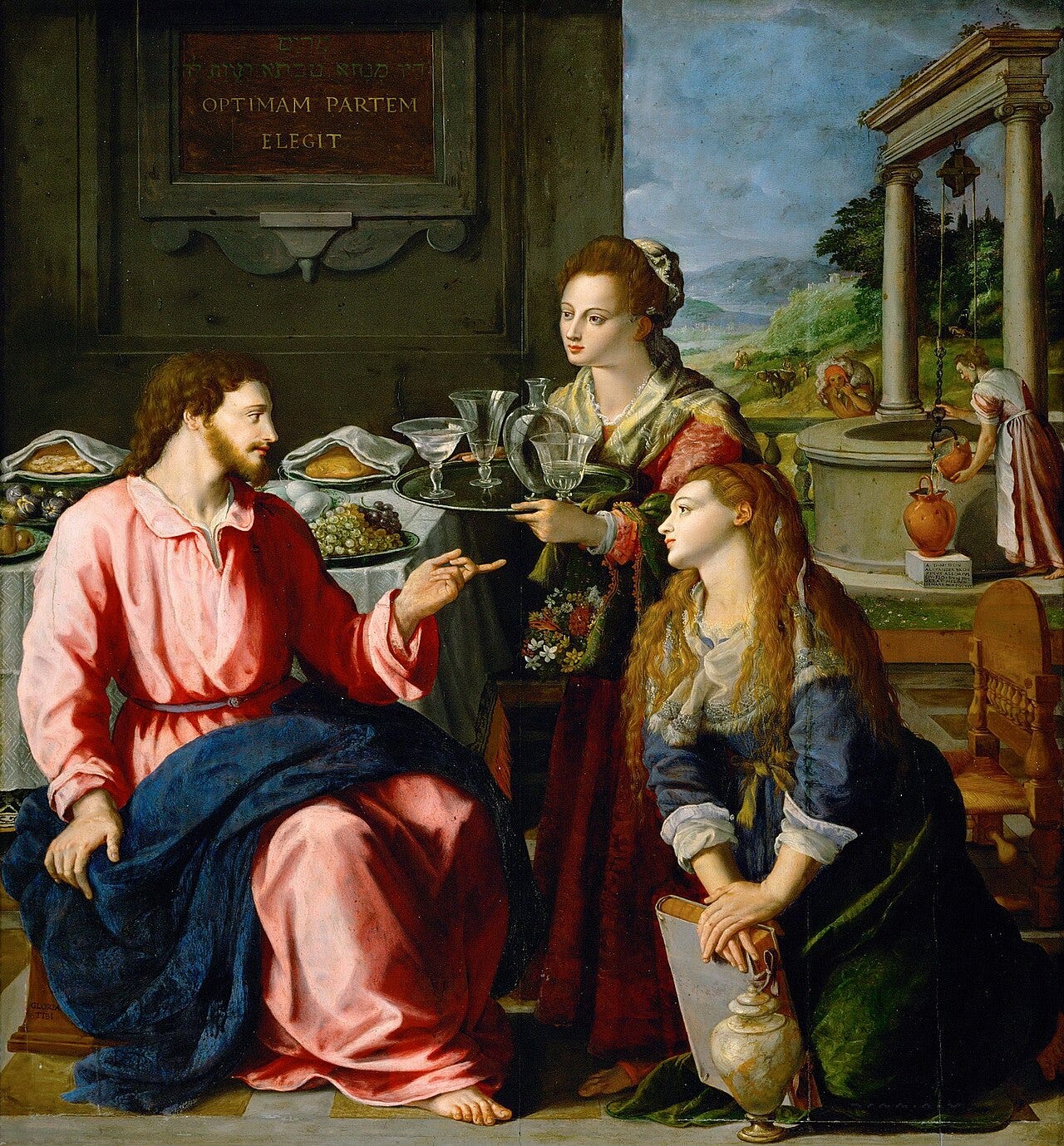
Let me continue this piece in a question-answer style.
—What do I do?
I write poetry and essays (short stories, too, but I have not been able to sell any new ones in about two years). I also ghostwrite and edit poetry. I do the latter regularly for EfikoMag (we are open).
—Did I go to school?
I have a BA in history and international studies from Lagos State University.
—What am I known for?
I am known as a troublemaker, but those who think me a thorn in their flesh often concede that I am an intelligent thorn. However, I think I have pretensions to intelligence more than I do the real thing. (Self-deprecation, I hear, is a form that pride takes.)
—What is the last thing I read?
Correspondence, the letters exchanged between Nelly Sachs and Paul Celan up until his death and hers the day after. The letters are very short and desperate; both writers wrote from the edge—the edge is in their voices. It’s a hard book to read. Language as a taking-hold-of, as some sanity in a mad world. These are two people who could say what I said, ‘If I stop writing, I will die.’
—What is the last great thing I read?
Has to be Lear (the Quarto Text). Man, I was sobered up when I read that last page. Shakespeare—thanks be to God who gave such gifts to a man.
Check out this review by Bruce Bawer.
—If I could recommend a single book to you, which would it be?
The Bible.
—Which book of the Bible have I read the most or do I return to?
Not because it’s my favourite, but because it’s the first epistle and I read the epistles a lot: I think it must be Romans. (Just as a reminder: the epistles are the most important books for a believer to read. The Gospels are for unbelievers, as a mentor of mine often says.)
—If I could correct one thing about my past, what would it be?
Regret, too, is a form of pride.
—What are some poems that I live by?
“Into My Own” and “Storm Fear” by Robert Frost (“Snow,” too: indeed almost all of Frost). “Every Riven Thing,” “Hard Night,” and “All My Friends” by Christian Wiman. “The Constructed Space” by W. S. Graham. “Men at Forty” by Donald Justice. “Finishing Up” by A. R. Ammons. “Those Winter Sundays” by Robert Hayden. “Legal Fiction” by William Empson, etc.
—What are my ambitions?
Well, I have expressed my interest in the Nobel Prize for Literature; but these days I hardly think of it. I will win it, anyhow.
But I recently said this somewhere: “To say ‘I’ without any confidence in the flesh—to carry shame and success without either adding anything to the ‘I’ that I am in Christ Jesus—to be perfectly content in Him—to have nothing that I cannot give away—to lose nothing that I cannot give thanks for: Man, this is now the ambition of my life.”
Additionally, I want to serve people. It’s why I started the Jésùyẹmí Poetry Program.
—What is one thing I look forward to?
Kissing a woman. (I can’t wait to be married.)
—A lesson I am learning?
Intelligence is not a virtue. Freedom, too, is not a virtue. These are values. What we make of them matters more than whether we are in possession of them.
—One great man I admire?
Lincoln. Abraham Lincoln.
—Gift ideas for me?
A note of appreciation. Prayers. Money.
—One weird thing I have in mind to do?
To give my daughter a name from a Shakespeare play: Imogen from Cymbeline, perhaps. (I doubt the woman I marry will let me.)
—Am I happy?
The other day, I was on my way out in an Uber. In the car, I had a thesaurus open and was working on a piece. Is that happiness? Maybe not. Let me add that I have great friends, very good ones.
—On my reading table:
Thomas Merton’s The Inner Experience, Food and Feasting in Art (a glossy-print art book) by Silvia Malaguzzi, Essays: English and American, a lean Yeats, a blue hardcover Collected Shakespeare (Tragedies), The Orwell Reader (a gift from a friend, I told you), and The Presence of Others (an anthology).
—A great film I have seen this year:
Luca (2021), though I also saw The Three Faces of Eve (1957). The final scene of Luca!
—Things by me that you could read:
This month, I published two pieces in Afrocritik: “The Consolation of Poetry” and a double review. Check them out.
Thank you for enduring that.
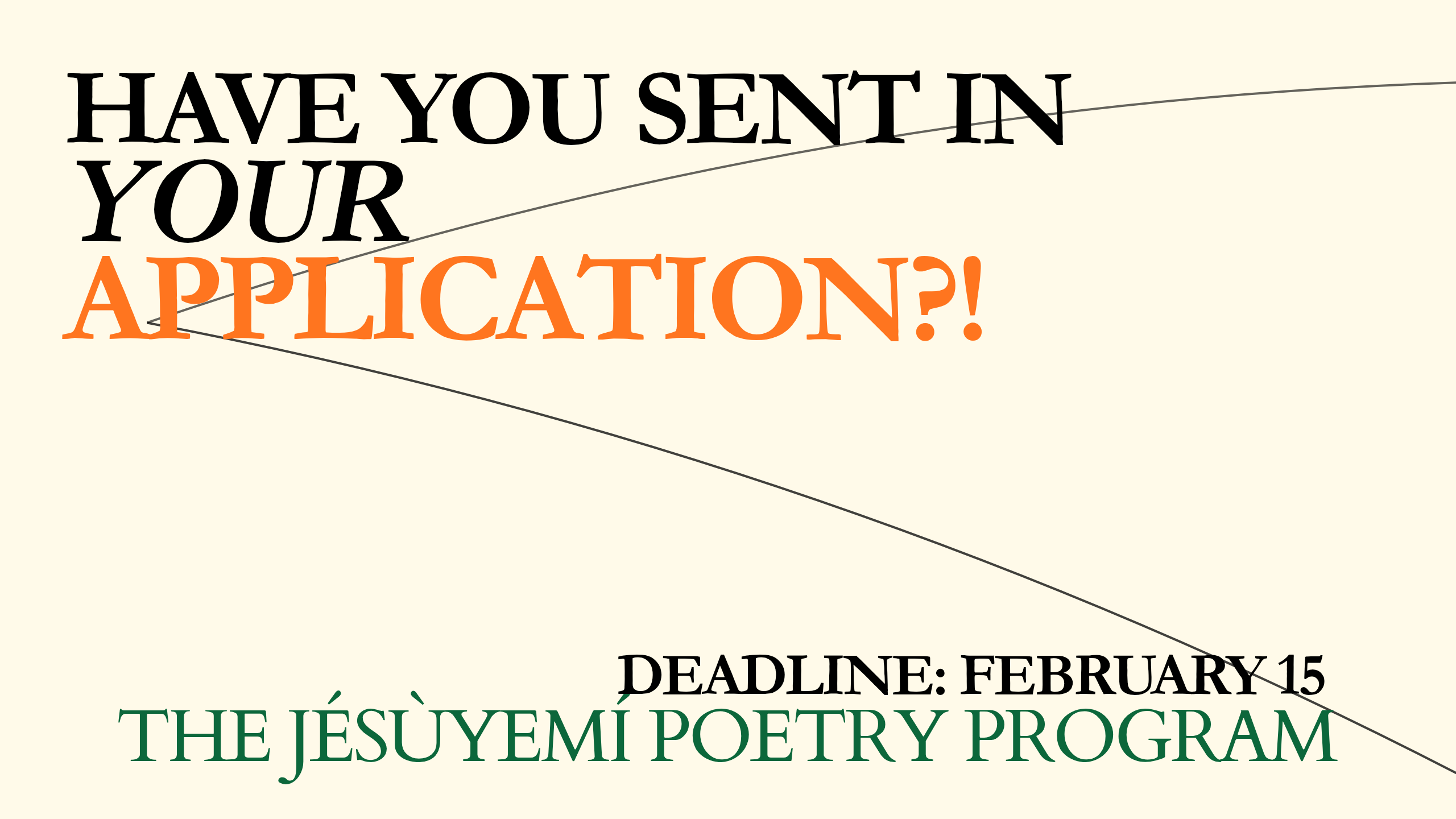
In other news, applications have started coming in for the Jésùyẹmí Poetry Program. We have also received some support. We are very grateful to the readers of this newsletter who have held up our arm. If you know a young poet, please share the link with them. I have embedded the link in this post a few times. But the link comes after this paragraph. If you are a young poet, I look forward to seeing your app.
Keep well. ‘Noli timere.’ 🔷
Thank you for reading Eliot of Lagos. If you’d like to support the work, visit Paystack.